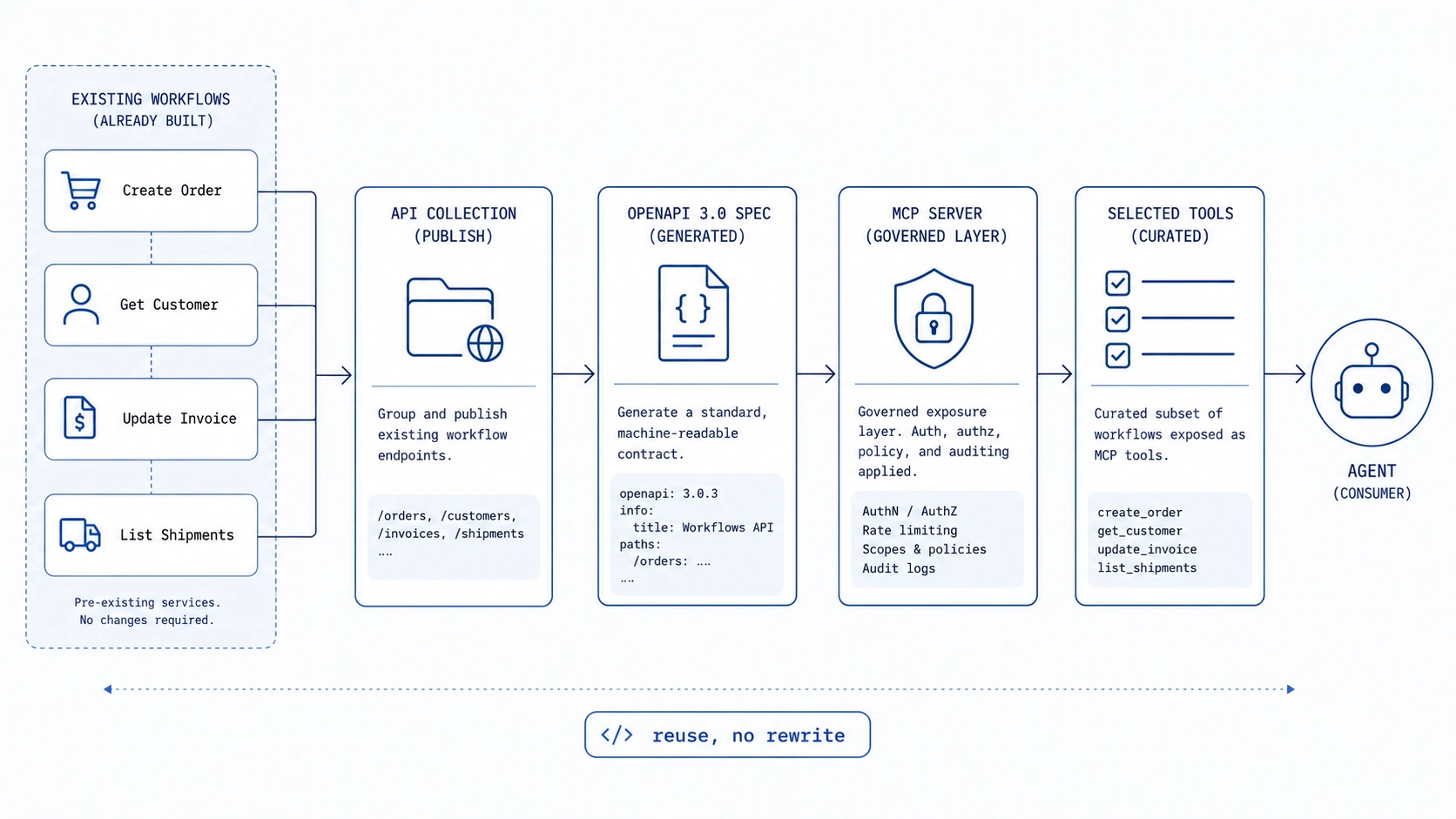
Your team has built integrations that work. They move customer data, trigger orders, update records, sync invoices. Years of API design, security reviews, and production hardening went into them.
Now a partner, a product team, or an internal AI initiative wants to put an agent in front of them.
The usual answer is to say no, or to build a separate locked-down layer from scratch. But the actual question is whether you can expose what you already have on your own terms: you decide who gets access, to what, under what constraints, and you keep a full record of every call. That's what a governed MCP server does.
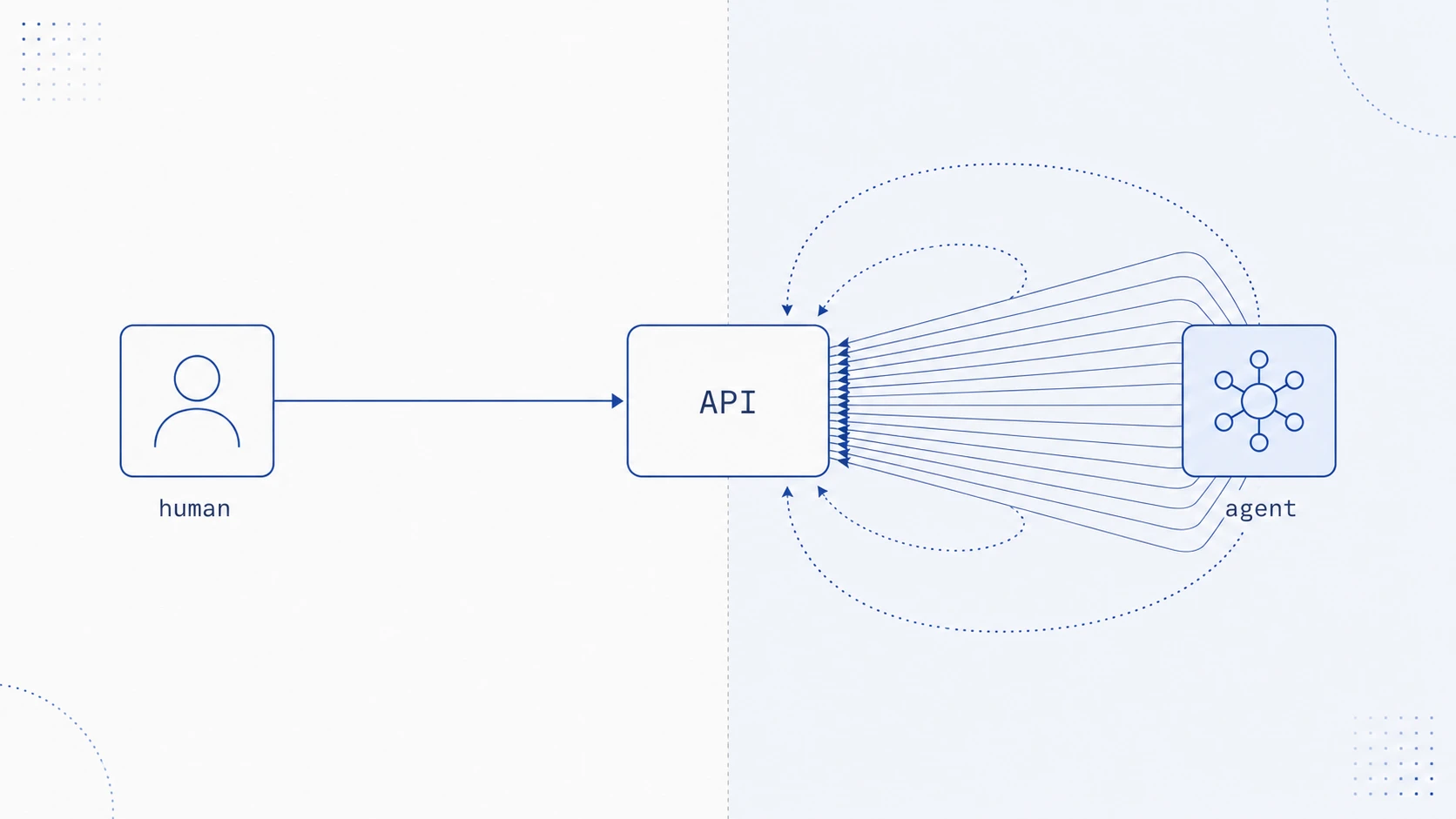
Agents call APIs differently than people do
When a human uses your API, they authenticate once, make a deliberate request, and move on. When an agent does it, the pattern is different: it may call the same endpoint dozens of times in a single task, retry on failure, and — unless the platform enforces it — have no inherent understanding of whose data it's allowed to see.
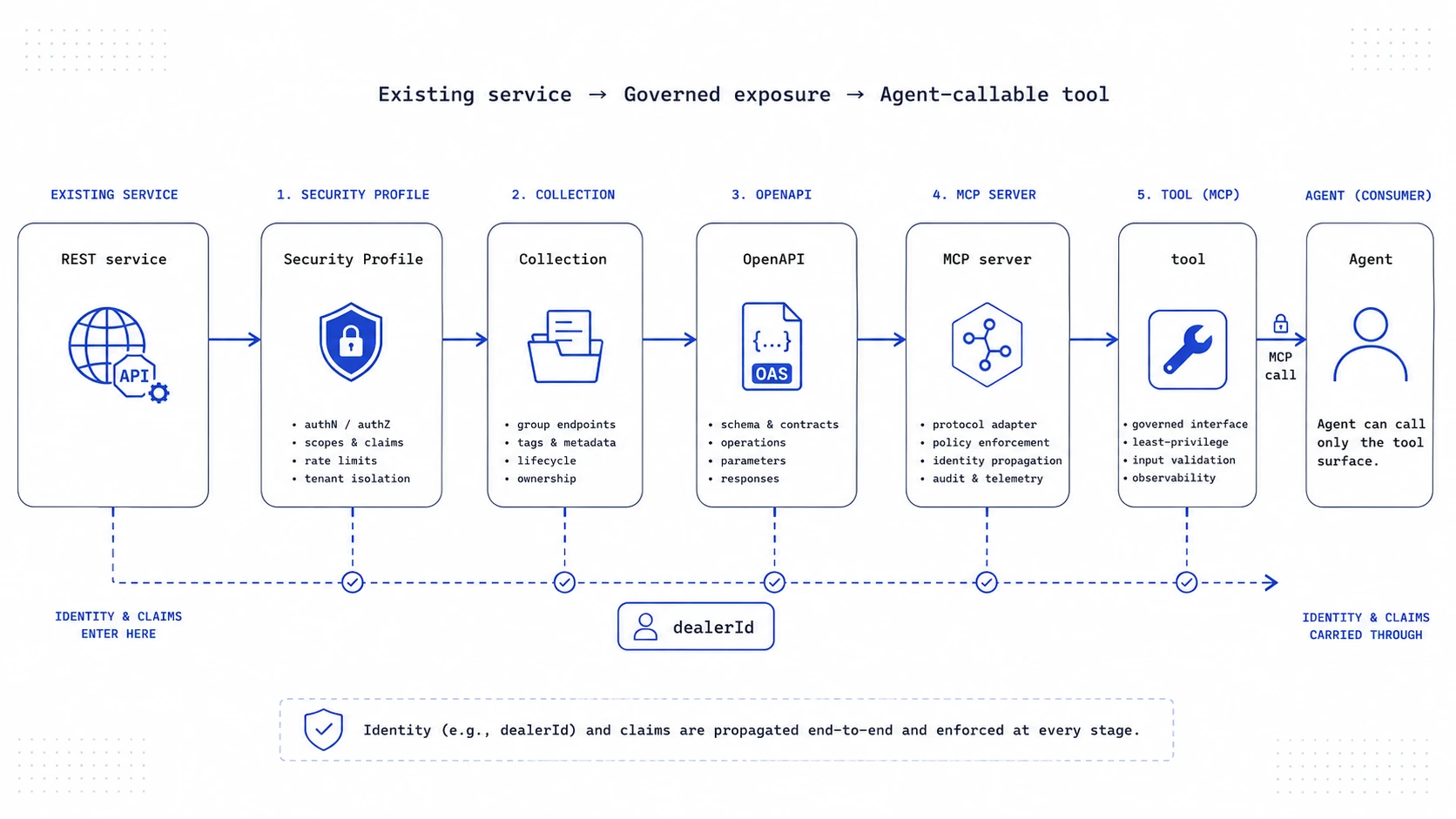
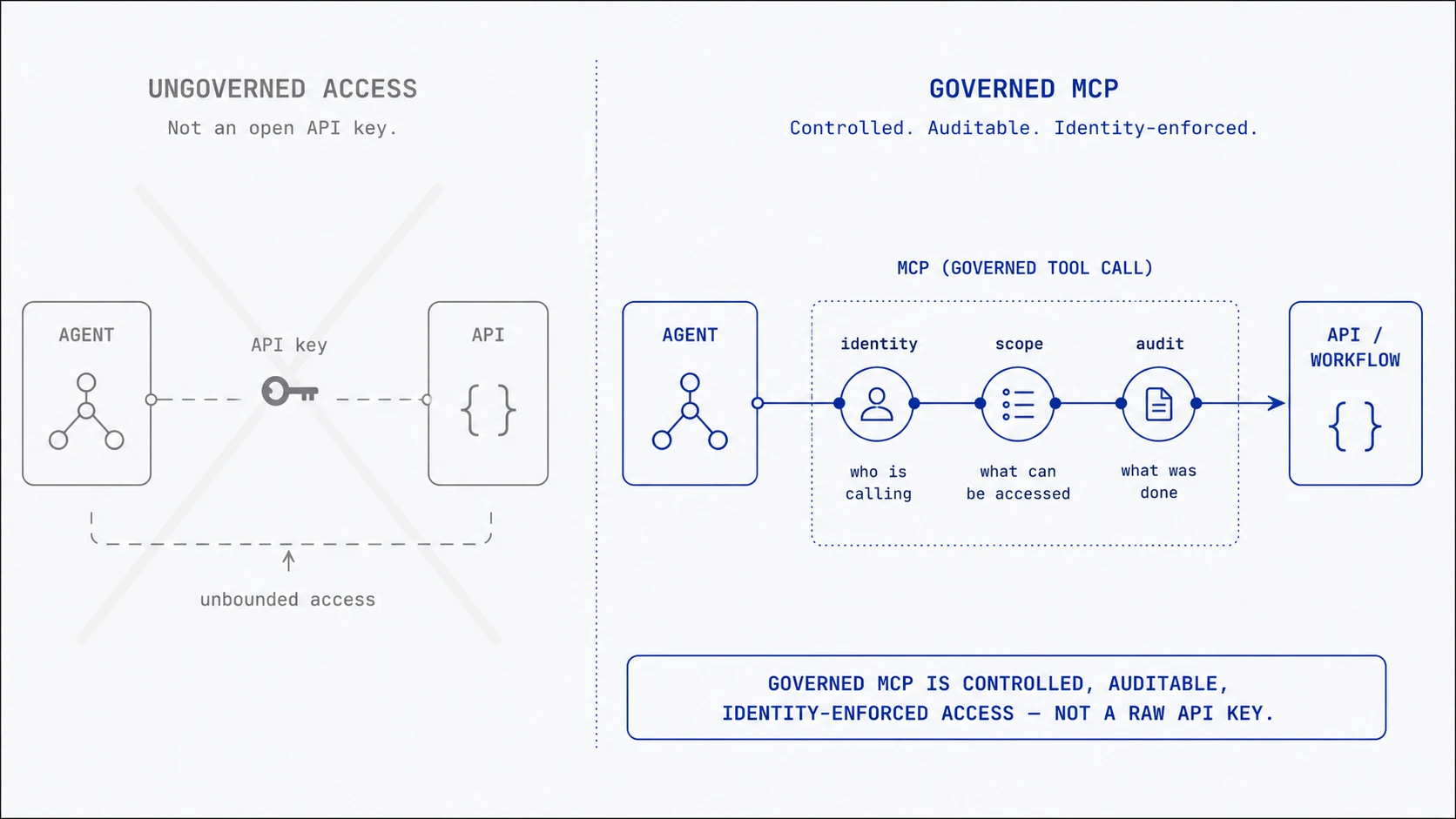
This isn't a flaw in agents. It's just how they work. The platform's job is to make sure that when an agent calls a tool, the call carries the right identity, hits the right scope, and produces a record you can audit later.
An agent that can call your APIs without carrying verified identity isn't a feature. It's an unreviewed access grant.
The governed MCP server pattern solves this by treating every tool invocation as a first-class, identity-bearing event — not a fire-and-forget call.
You decide what agents can see and do
The starting point isn't code. It's a decision about access.
In Koodisi, you define the permission vocabulary for your APIs once — the scopes that control what callers can do, and the claims that carry caller identity (a customer ID, a region, a tenant identifier). That vocabulary gets attached to every API you expose through the platform.
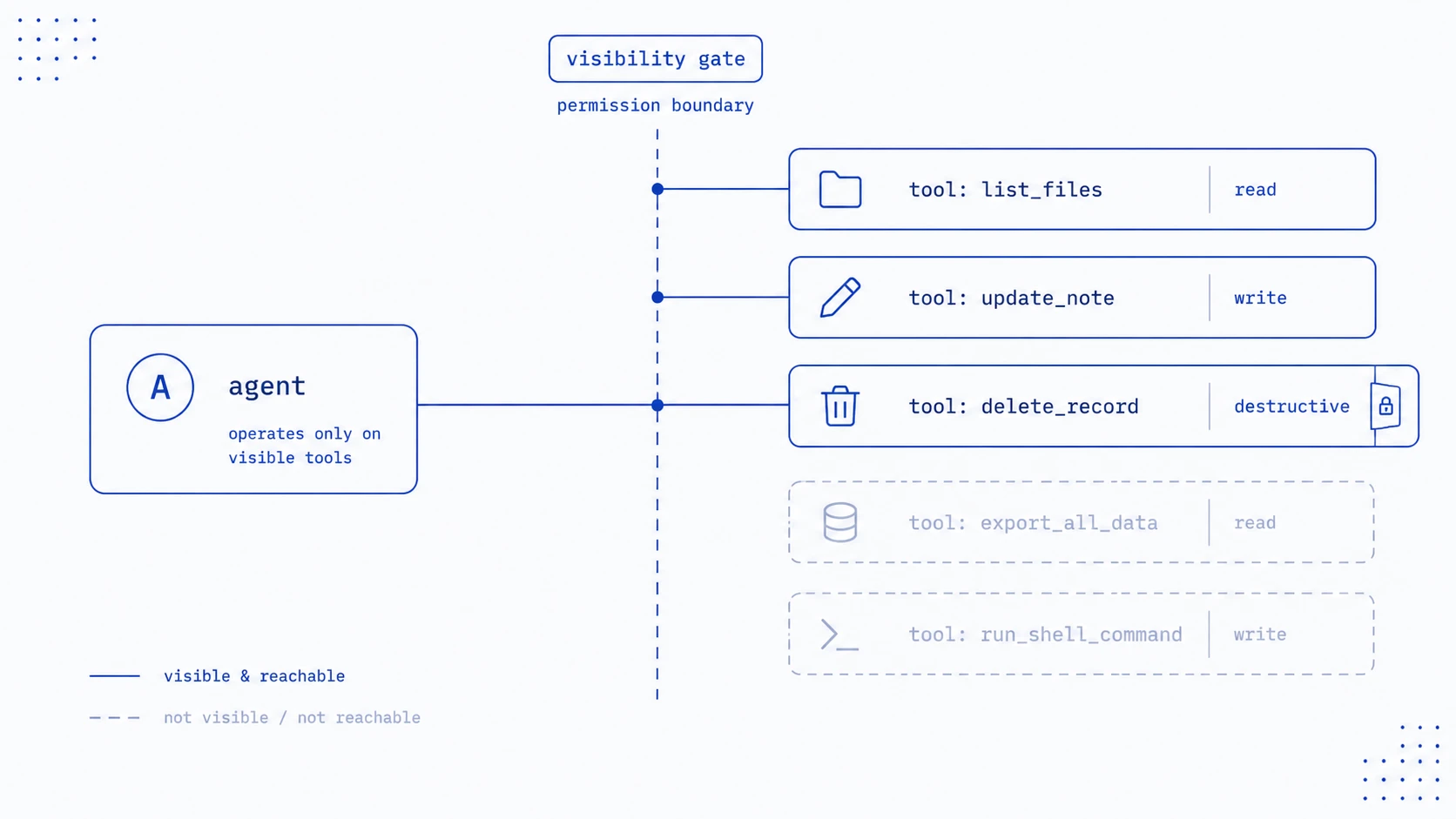
When you build an MCP server on top of your existing integrations, each operation you expose becomes a tool with a risk label: read, write, or destructive. That label travels with every invocation. It's how a client application knows to ask for confirmation before an agent runs a write or a destructive action — without needing to understand the semantics of your specific API.
You choose which operations agents can call. Anything you don't expose simply isn't reachable.
The result is a tool surface that reflects your access policy, not the agent's judgment. The agent sees what you offer it. Nothing more.
Access is scoped to verified identity, not to the deployment
The harder governance problem isn't which tools an agent can call — it's whose data it gets to see when it calls them.
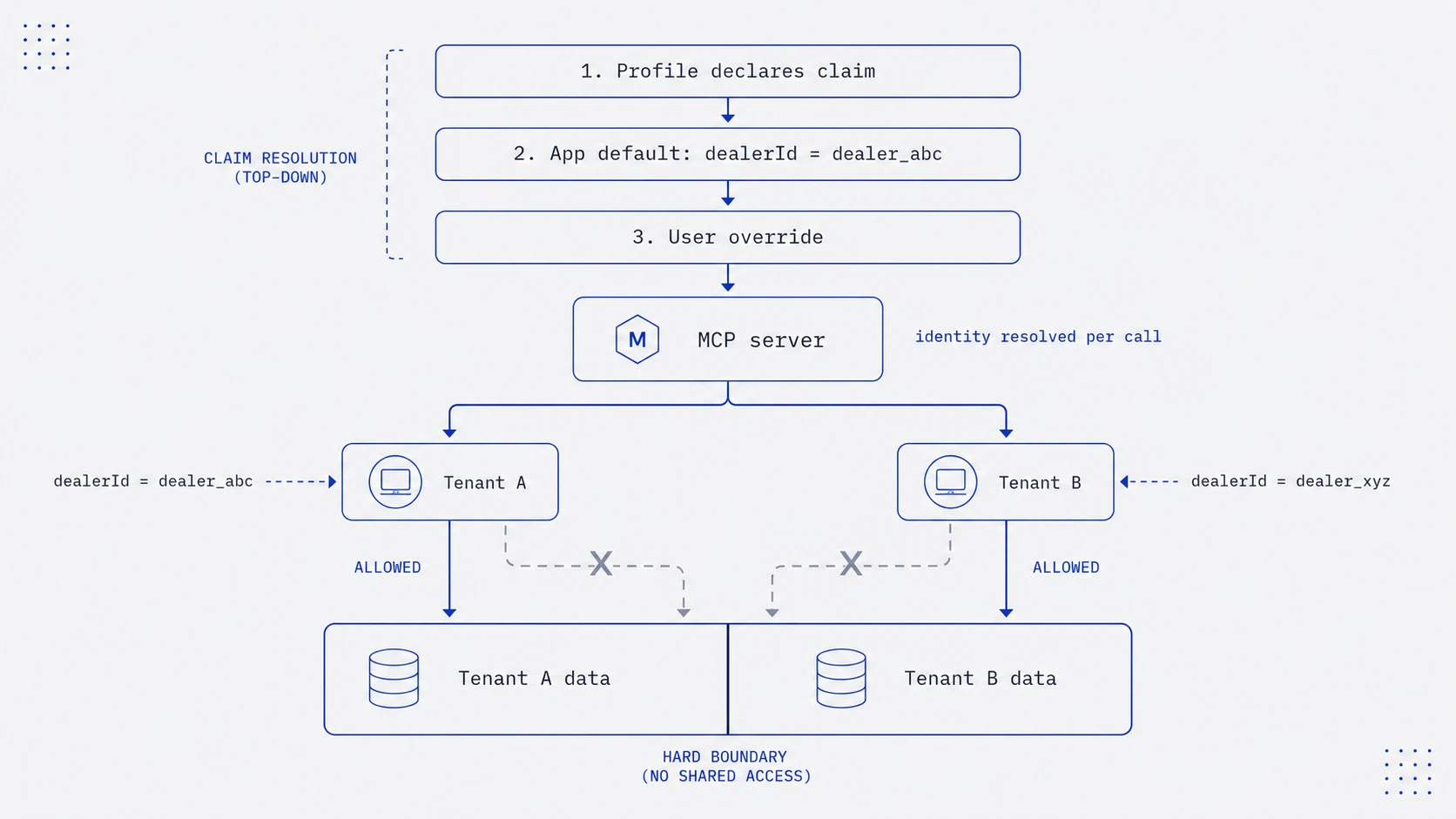
A single MCP server might serve multiple clients: a partner integration, an internal product team, a pilot customer. Each of them should only be able to reach their own data, even if they're calling the same tool.
Koodisi handles this at the call layer. When a client authenticates, their identity — a customer ID, a tenant scope, a set of permitted operations — gets verified and attached to every request they make. The downstream API receives that verified identity as part of the call, bound to the specific fields that determine data access. The agent never decides whose data it's looking at. The platform does, on every invocation.
The failure mode here isn't a malicious agent. It's an agent working exactly as designed, calling a tool with no tenant scoping, and returning data from the wrong customer because nothing stopped it. That's a support ticket at best and a breach disclosure at worst.
Identity is enforced per call, not per deployment.
Two onboarding paths: internal teams and external partners
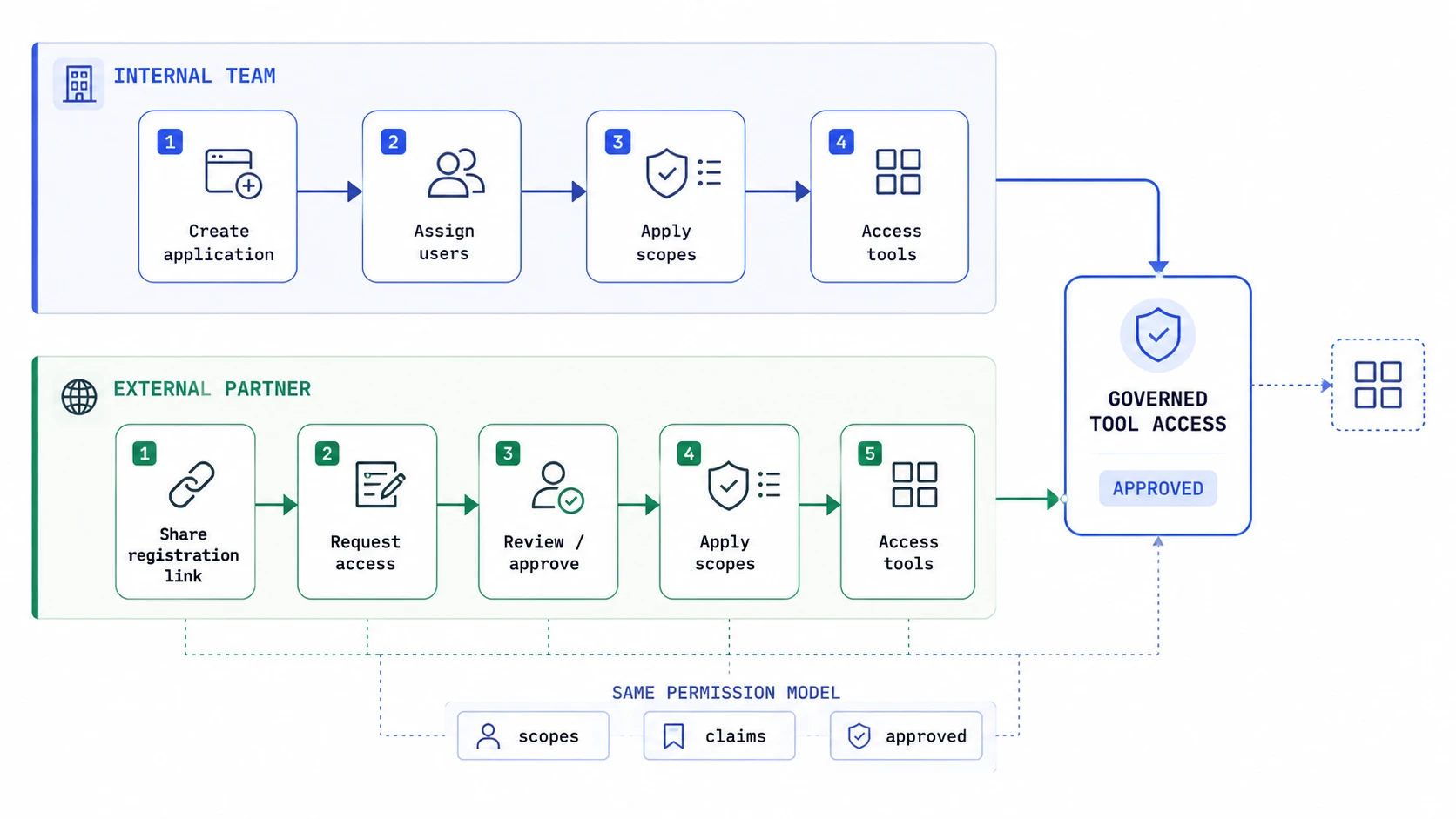
For internal teams — product engineers, your AI initiative — access is by assignment. You create an application, define its permissions, and explicitly add the people who can connect. No one gets in without being on the list.
For external partners or pilot customers, there's a self-registration flow. You share a link; they request access; you review and approve or reject each one. Approved users authenticate with shared credentials and are bound to whatever scopes and data constraints you set at approval time. Revoke whenever you want.
The permission model is the same either way. The difference is whether you're managing a known internal list or reviewing inbound requests from outside your org.
Every call leaves a trace
Once agents are in production, the question shifts from "can we do this?" to "what did it do?"
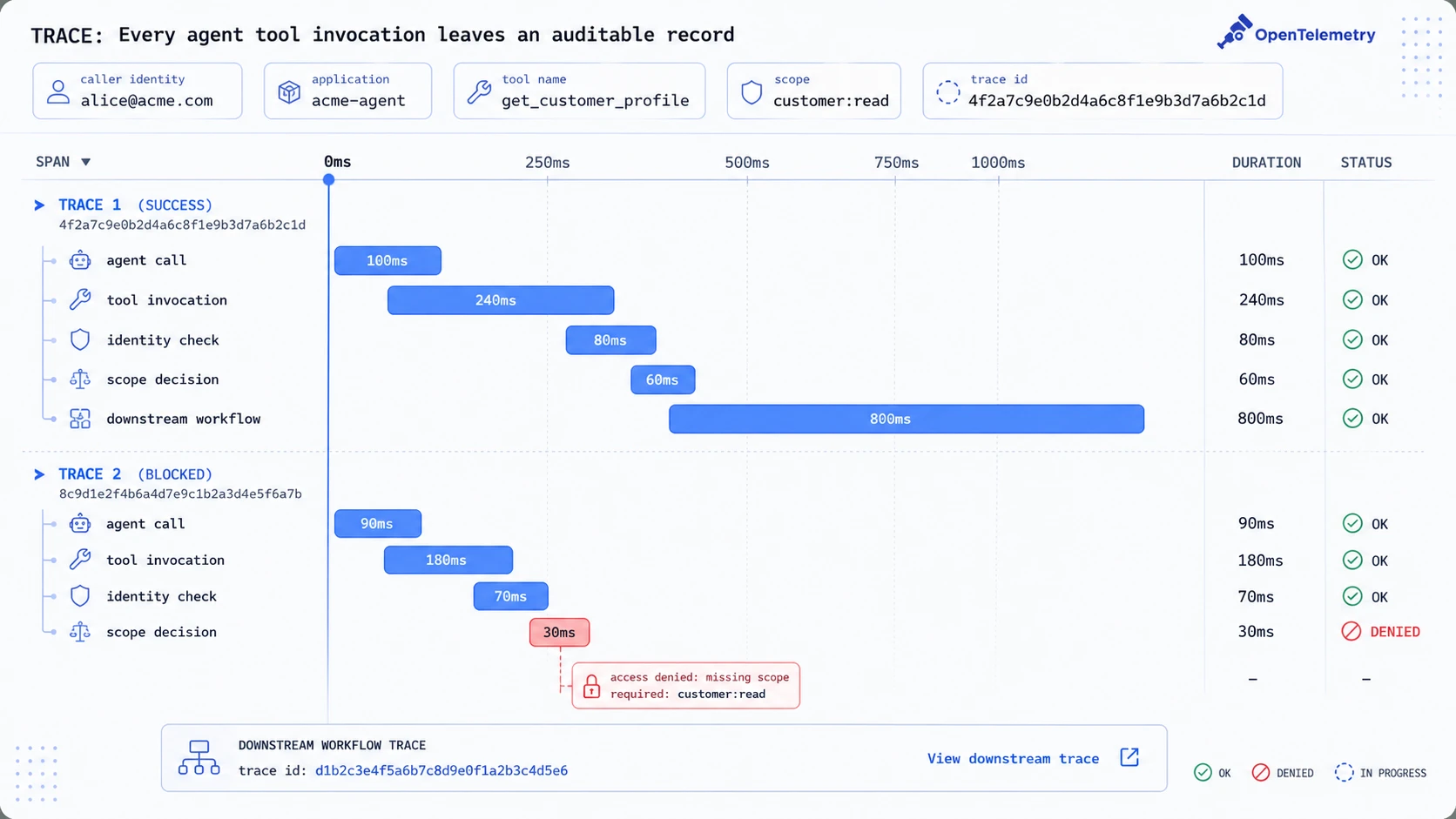
Every tool invocation produces an OpenTelemetry trace — tool name, caller identity, which application they came through, whether the call succeeded or was blocked, how long it took, and a direct link to the downstream workflow trace. That record exists for every call, not just the ones that fail.
This isn't about compliance for its own sake. It's about being able to answer a specific question six months from now: which agent call changed that record, who authorized it, and was it within the scope we approved?
No per-execution billing applies here. Your bill doesn't change because an agent calls a tool a hundred times in a task instead of once. Only the capabilities you've enabled determine what you pay.
What this isn't
A governed MCP server isn't a way to open up your APIs to any agent that asks. It's the opposite — it's how you offer controlled, auditable, identity-enforced access to specific agents and clients you've approved, without rebuilding your integration layer from scratch.
If you're running integrations that touch customer data, financial records, or anything regulated, the architecture above gives you a set of auditable decisions you can point to: who had access, what they could do, what they actually did, and when. That's a different posture than "we gave the agent an API key and hoped for the best."
Koodisi's MCP server is included in the enterprise license — no per-execution overages, OpenTelemetry included. If you're already running integrations on the platform, the path from existing workflow to governed MCP tool is shorter than starting from scratch.